HALO laser Korea is a skin resurfacing and rejuvenation treatment for patients who want to improve skin texture, pores, fine wrinkles, skin tone, and overall skin quality. HALO is known as a hybrid fractional laser because it delivers both non-ablative and ablative wavelengths to the same microscopic treatment zone.
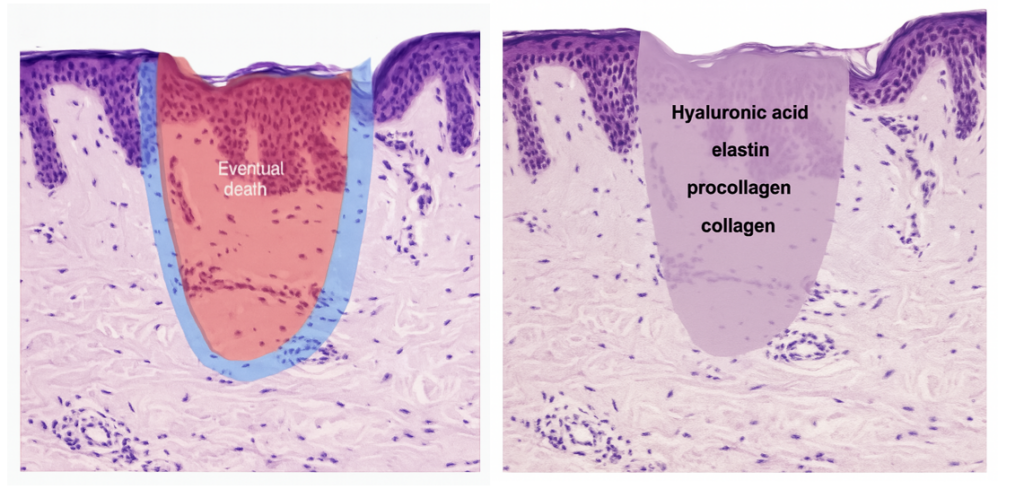
In simple terms, HALO laser Korea can treat both the surface and deeper superficial dermal layers in one treatment. The 1470 nm wavelength creates non-ablative coagulation in the epidermis and dermis, while the 2940 nm Er:YAG wavelength creates controlled ablative resurfacing in the epidermis. Sciton explains that HALO delivers 1470 nm coagulation and 2940 nm ablation to the same microscopic treatment zone, with the 1470 nm wavelength treating approximately 100–700 microns and the 2940 nm wavelength treating approximately 0–100 microns.
At LABE Plastic Surgery in Songdo, Incheon, HALO laser Korea can be considered alone or in combination with BBL HERO. This combination can be useful when the goal is to improve wrinkles, pores, skin elasticity, pigmentation, redness, and dull skin tone together.
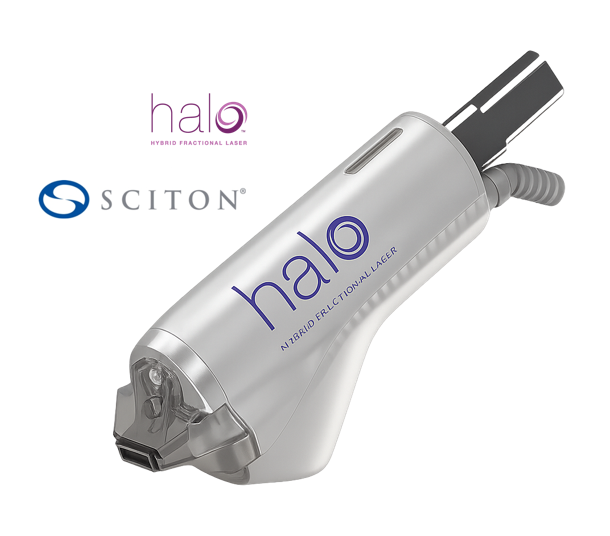
HALO Laser Korea: What Is a Hybrid Fractional Laser?
HALO laser Korea is different from a single-wavelength resurfacing laser. A traditional non-ablative laser can stimulate the dermis with less surface injury, while an ablative laser can resurface the epidermis more directly. HALO combines both concepts.
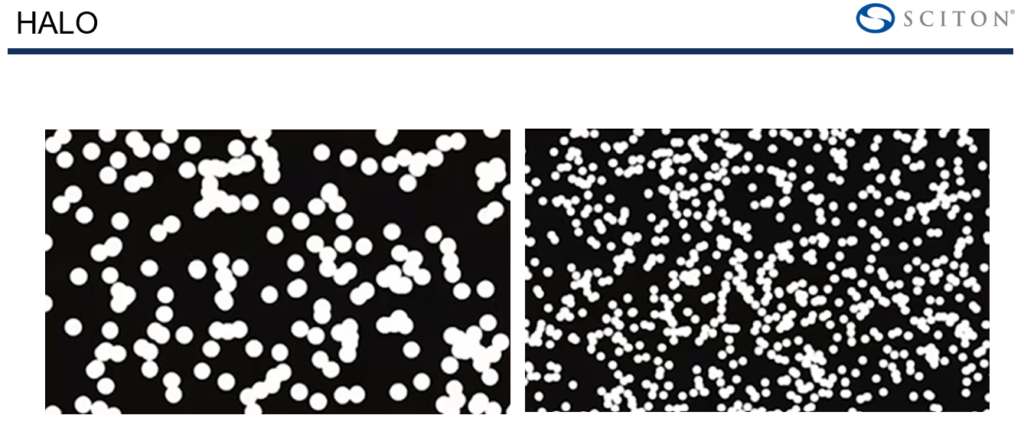
The meaning of hybrid fractional laser is that HALO uses two wavelengths in the same microscopic treatment zone:
| Wavelength | Type | Main Role |
|---|---|---|
| 1470 nm | Non-ablative | Coagulation and dermal remodeling |
| 2940 nm | Ablative Er:YAG | Controlled epidermal resurfacing |
| 1470 nm + 2940 nm | Hybrid fractional | Surface renewal + deeper remodeling in one treatment zone |
This hybrid design allows HALO laser Korea to address texture and tone together. It can be considered for patients who have rough texture, sun damage, enlarged-looking pores, fine wrinkles, and dullness.
The important point is that HALO is not simply a “peeling laser.” It is a fractional resurfacing treatment that combines epidermal renewal and dermal coagulation in a controlled pattern.
HALO Laser Korea Key Point 1: 1470 nm Non-Ablative Coagulation
The first key point of HALO laser Korea is the 1470 nm wavelength.
The 1470 nm wavelength is non-ablative. It does not primarily remove the surface in the same way as an ablative laser. Instead, it creates coagulation zones in the epidermis and dermis. Sciton describes the 1470 nm component as delivering coagulation between approximately 100 and 700 microns.
This is important for skin quality because dermal remodeling is related to:
- Fine wrinkles
- Enlarged-looking pores
- Skin elasticity
- Rough texture
- Dermal density
- Sun-damaged skin quality
For HALO laser Korea, the 1470 nm wavelength can be explained as the deeper remodeling part of the treatment. It helps target the layer where collagen remodeling and skin firmness are important.
HALO Laser Korea Key Point 2: 2940 nm Ablative Resurfacing
The second key point of HALO laser Korea is the 2940 nm Er:YAG wavelength.
The 2940 nm wavelength is ablative. It is highly absorbed by water and can create controlled superficial ablation. Sciton describes the 2940 nm wavelength in HALO as delivering ablation from approximately 0 to 100 microns in the epidermis.
This part of HALO laser Korea is related to surface renewal. It may help improve:
- Dull surface texture
- Roughness
- Superficial pigmentation appearance
- Uneven light reflection
- Fine surface irregularity
- Skin glow
Because HALO uses fractional delivery, the treatment does not remove the entire surface like full-field ablative resurfacing. Instead, it creates microscopic treatment zones while leaving surrounding skin to support recovery.
HALO Laser Korea Key Point 3: DTO and Optical Navigation Technology
The third key point of HALO laser Korea is its smart energy delivery system.
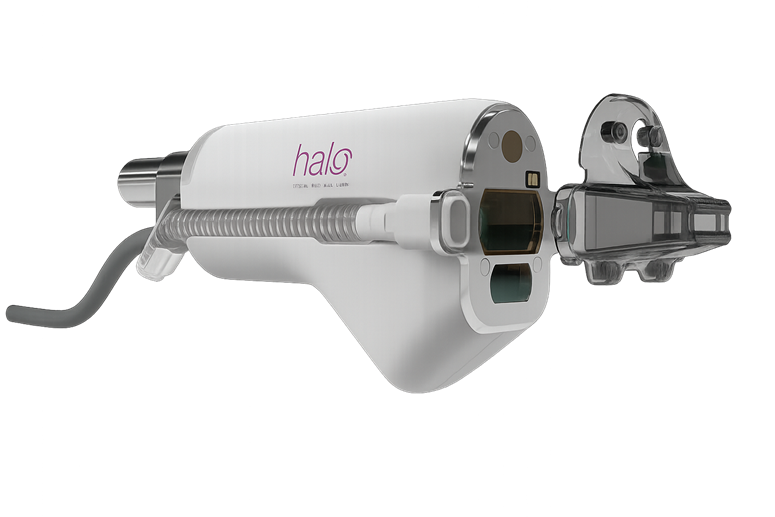
HALO includes DTO, which stands for Dynamic Thermal Optimization. In Sciton’s HALO product information, DTO is described as automatically adjusting the power of each individual 1470 nm pulse based on the patient’s skin temperature.
This means HALO laser Korea is not only about wavelength selection. It is also about real-time energy adjustment.
HALO also incorporates optical navigation. Sciton France describes HALO optical navigation as a feature that monitors the speed of the moving handpiece relative to the skin surface and automatically adjusts pulsing to support even and accurate treatment.
Why DTO Matters in HALO Laser Korea
DTO helps maintain treatment consistency by adjusting energy delivery according to skin temperature. This can be important because skin response can vary by area, thickness, baseline redness, and previous treatment history.
Why Optical Navigation Matters in HALO Laser Korea
Optical navigation helps the handpiece deliver energy more evenly as the device moves across the skin. This can reduce the risk of uneven coverage and supports more consistent treatment density.
For patients, this means HALO laser Korea is not only a hybrid fractional laser. It is a system designed to help deliver controlled resurfacing and coagulation more consistently.
HALO Laser Korea Key Point 4: BBL HERO Combination for Tone, Pores, Wrinkles, and Elasticity
The fourth key point of HALO laser Korea is its combination with BBL HERO.
BBL HERO and HALO work in different ways. BBL HERO uses BroadBand Light to target pigmentation, redness, vascular color changes, and uneven tone. HALO works as a hybrid fractional laser for texture, pores, fine wrinkles, and dermal remodeling.
Sciton Korea also hosts educational content specifically on combination treatments with HALO and BBL HERO, presenting the two treatments as a combined strategy for better skin.
HALO Laser Korea With BBL HERO for Pigment and Texture
HALO laser Korea with BBL HERO can be explained as a tone-and-texture combination.
- BBL HERO: pigmentation, redness, dull tone, vascular color
- HALO: pores, wrinkles, rough texture, skin remodeling
- Combination goal: brighter tone + smoother texture + improved skin quality
This can be useful for patients who have both sun damage and rough skin texture. If BBL HERO is used alone, color may improve but rough texture may remain. If HALO is used alone, texture may improve but redness or pigmentation may still need additional light-based treatment.
HALO Laser Korea With BBL HERO for Pores and Elasticity
HALO laser Korea can help improve the appearance of enlarged-looking pores by treating the superficial and dermal layers related to skin texture and collagen support. BBL HERO can improve overall tone and vascular redness, making the skin look clearer.
Together, HALO and BBL HERO may support a smoother and more radiant appearance. The effect should be explained as gradual and individual, not guaranteed in every patient.

HALO Laser Korea Key Point 5: Downtime, MENDs, and Body Treatment Areas
The fifth key point of HALO laser Korea is downtime and treatment area.
After HALO treatment, patients may experience redness, warmth, swelling, bronzing, roughness, and peeling. A characteristic finding after fractional resurfacing is MENDs, which stands for microscopic epidermal necrotic debris. Post-treatment instructions for HALO describe that tiny dark spots and a bronzed appearance may become more noticeable on the second or third day after treatment, and these are called MENDs.
For many patients, the visible roughness and peeling process can last around 5–7 days on the face. Some post-care instructions note peeling or flaking over the next 5–7 days, while other areas such as the neck, chest, hands, or arms may heal more slowly.
At LABE Plastic Surgery, HALO laser Korea is usually explained with realistic downtime.
HALO is not a no-downtime treatment. On the face, MENDs, bronzing, dryness, and peeling may last around 5–7 days, depending on treatment intensity and skin condition.
HALO Laser Korea for Face and Body
HALO laser Korea is not limited to the face. It can also be considered for selected body areas such as the neck, chest, hands, arms, or other sun-damaged areas depending on skin condition and treatment goals.
Body areas often recover more slowly than the face, so treatment intensity and scheduling should be planned carefully. For example, neck or chest treatments may need more conservative settings or longer recovery planning.
HALO Laser Korea for Wrinkles, Pores, and Skin Elasticity
HALO laser Korea may be considered when the patient wants improvement in fine wrinkles, pores, skin texture, and skin elasticity.
Fine wrinkles are often related to reduced dermal collagen and surface irregularity. Pores may appear larger when the surrounding dermal support becomes weaker. Skin elasticity decreases when collagen and elastin support become less organized.
Because HALO combines non-ablative coagulation and ablative resurfacing, it can address several skin quality issues at once:
- 1470 nm supports dermal remodeling
- 2940 nm supports surface resurfacing
- Fractional zones allow controlled healing
- DTO supports real-time energy adjustment
- Optical navigation supports more even coverage
This makes HALO laser Korea especially useful for patients who want more than a simple brightening treatment. It can be positioned as a hybrid fractional laser for deeper texture and skin quality improvement.
HALO Laser Korea Treatment Process
HALO laser Korea treatment usually begins with consultation and skin evaluation.
The doctor evaluates:
- Skin thickness
- Pigmentation pattern
- Redness and vascular tendency
- Pore size and texture
- Fine wrinkles
- Acne scar depth
- Recent sun exposure
- Downtime tolerance
- Whether BBL HERO combination is needed
- Whether face or body treatment is planned
After evaluation, the treatment depth, density, and intensity can be selected. The 1470 nm and 2940 nm components can be adjusted depending on whether the main goal is texture, pores, wrinkles, pigmentation, or resurfacing.
When combined with BBL HERO, the treatment plan should decide which concern is the priority: pigment, redness, pores, wrinkles, or texture. The order and intensity can vary depending on skin condition.
HALO Laser Korea at LABE Plastic Surgery in Songdo, Incheon
At LABE Plastic Surgery in Songdo, Incheon, HALO laser Korea can be planned as part of a customized laser and skin regeneration program.
Songdo is close to Incheon International Airport, which may be convenient for international patients visiting Korea for aesthetic treatment, business travel, or a short stay. For patients who do not want to rush into Seoul, Gangnam, or Hongdae, Songdo can be a practical location for consultation and treatment.
At LABE Plastic Surgery, HALO may be discussed with:
- BBL HERO for tone, pigmentation, redness, and glow
- MOXI for lighter texture and prejuvenation programs
- UltraPulse Alpha for deeper scar or resurfacing needs
- PicoWay for selected pigmentation or tattoo concerns
- Re2O or Juvelook skin booster for regenerative support
- LDM Triple for post-treatment calming and recovery support
The key is customization. HALO laser Korea should be planned according to skin type, pigmentation tendency, downtime schedule, and whether the patient needs face-only or body-area treatment.
Who May Consider HALO Laser Korea?
HALO laser Korea may be considered for patients who have:
- Fine wrinkles
- Enlarged-looking pores
- Rough skin texture
- Mild acne scars
- Sun damage
- Dull skin tone
- Reduced skin elasticity
- Uneven surface reflection
- Interest in BBL HERO combination
- Interest in face and body resurfacing
However, HALO may not be suitable for every patient. Patients with active dermatitis, recent tanning, severe melasma tendency, uncontrolled acne inflammation, or limited downtime should be evaluated carefully before treatment.
FAQ About HALO Laser Korea
Q1. What is HALO laser Korea?
HALO laser Korea is a hybrid fractional laser treatment that combines 1470 nm non-ablative coagulation and 2940 nm ablative resurfacing in the same microscopic treatment zone.
Q2. What does hybrid fractional laser mean?
Hybrid fractional laser means that both non-ablative and ablative wavelengths are delivered fractionally. In HALO, 1470 nm supports coagulation and dermal remodeling, while 2940 nm supports epidermal resurfacing.
Q3. Can HALO laser Korea be combined with BBL HERO?
Yes. HALO laser Korea can be combined with BBL HERO when the goal is to treat both tone and texture. BBL HERO targets pigmentation and redness, while HALO targets pores, wrinkles, texture, and remodeling.
Q4. How long is the downtime after HALO laser Korea?
Downtime depends on treatment intensity and area. On the face, MENDs, bronzing, dryness, and peeling commonly last around 5–7 days. Body areas such as neck, chest, hands, or arms may need longer recovery planning.
Q5. Can HALO laser Korea be used on the body?
Yes. HALO laser Korea may be considered for selected body areas such as the neck, chest, hands, and arms depending on skin condition and goals. Body areas may recover more slowly than the face, so intensity and timing should be adjusted.
Summary: HALO Laser Korea for Hybrid Fractional Resurfacing With BBL HERO
HALO laser Korea is a hybrid fractional laser treatment that combines 1470 nm non-ablative coagulation and 2940 nm ablative resurfacing. This allows HALO to address both dermal remodeling and surface renewal in the same microscopic treatment zone.
The treatment can be useful for fine wrinkles, pores, rough texture, sun damage, dullness, and reduced skin elasticity. When combined with BBL HERO, HALO can be part of a broader skin rejuvenation plan that targets tone, pigmentation, redness, texture, pores, and glow together.
DTO and optical navigation help support more consistent energy delivery and even coverage. Downtime is usually not zero; on the face, MENDs and peeling are commonly expected for around 5–7 days. HALO laser Korea can also be considered for selected body areas, but body-area recovery may require more planning.
At LABE Plastic Surgery in Songdo, Incheon, near Incheon International Airport, HALO laser Korea can be planned according to skin type, pigmentation pattern, texture concerns, pore appearance, wrinkle depth, and downtime schedule.